
Contact Us
Have questions about the Hotel of Horror and our attractions? Contact us today!
Email: info@hotelofhorror.com
Phone: (570) 99 BEAST

The Hotel of Horror and Altered Nightmares Haunted Houses are both imprisoned within the legendary, abandoned Lake House Hotel in historic Saylorsburg, Pennsylvania, in the heart of the Pocono Mountains. Rather than occupying an ordinary commercial building, these modern horror attractions infest the rooms, corridors, and underground spaces of a property shaped by more than two centuries of history.
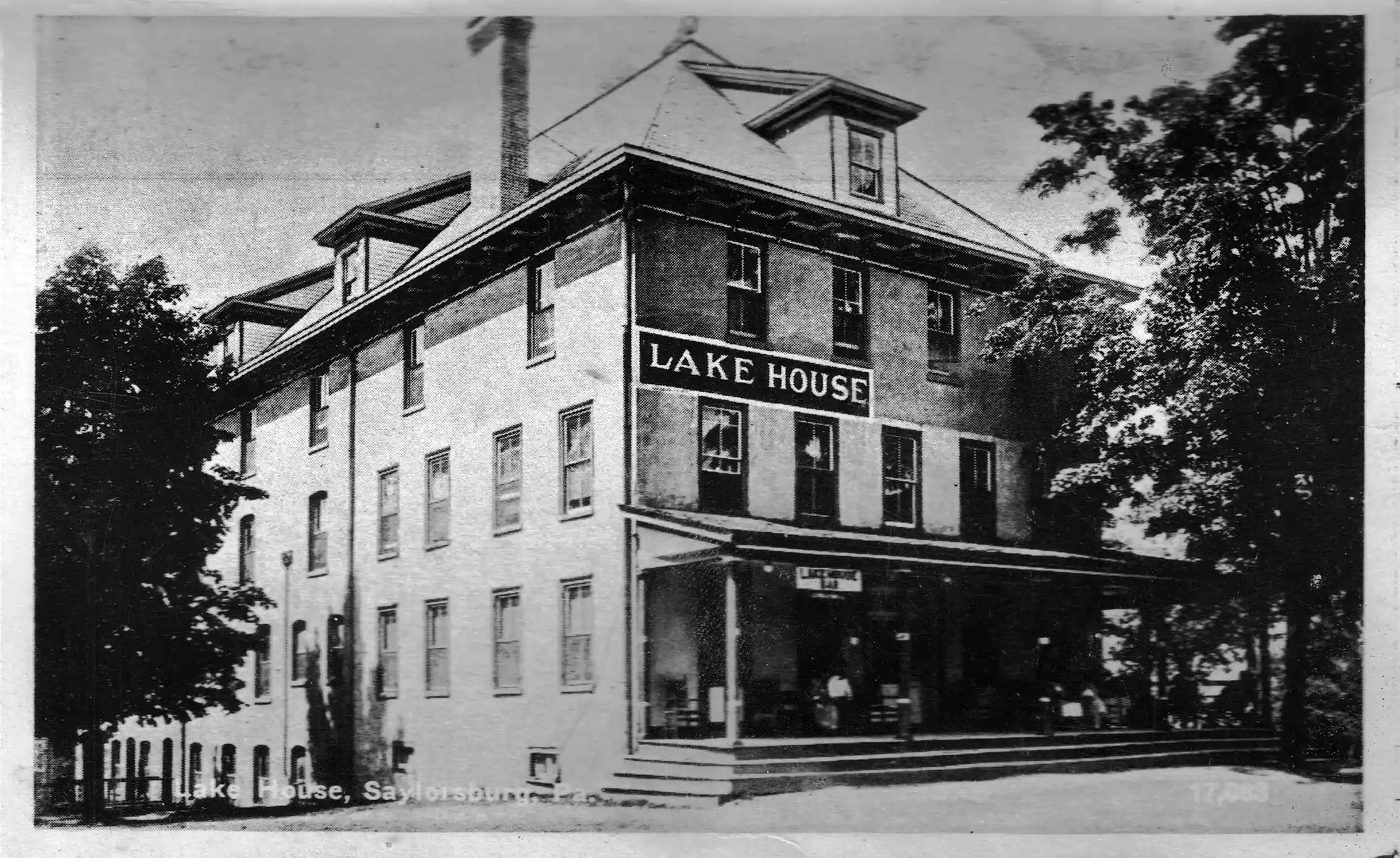
Long before the first haunted house opened within its walls, the Lake House Hotel witnessed generations of travelers, soldiers, laborers, hotel guests, business owners, and local residents. Its history includes dramatic expansions, industrial accidents, sickness, economic despair, and unexplained tragedies—creating a dark and sinister backdrop for the attractions that inhabit the building today.
The story begins with an original stagecoach stop dating to the late 1700s. Only portions of its foundation remain, sheathing the walls of the furthest basement rooms beneath the encapsulated Victorian mansion.
The destruction of that original stagecoach stop gave birth to a tavern known at the time as the Saylorsburg Hotel, an inn for travelers built by Charles Saylor in 1847. Over the following 53 years, the property underwent extensive construction and expansion.
The first great rebirth of the Saylorsburg Hotel occurred sometime between 1882 and 1888 with the arrival of the railroad. The roof was removed, a third story was added, and the exterior was renovated to reflect the elaborate architecture of the Victorian era.
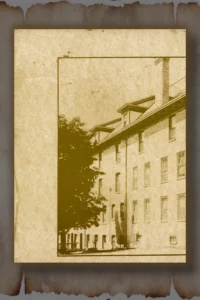
That remarkable mansion still exists inside the grand hotel addition constructed sometime between 1892 and 1895. Together, these structures created the massive hotel that remains standing today.
During the Civil War, the hotel hosted the entire Monroe County Battalion, consisting of six companies of soldiers. The building was also used as a private residence and witnessed its share of births and deaths.
At several points during its early history, local mining and railway operations used the hotel to house portions of their business activities. It also served as an infirmary and a place where the next of kin could retrieve workers following tragic accidents. Historical accounts record that severely injured men died on the hotel’s front porch while waiting for their families to arrive after accidents in the local mines and during railway construction.
In October 1918, the local press reported that Spanish influenza had arrived in the Pocono Mountains, bringing widespread sickness and death. The recently constructed county hospital was unable to accommodate the growing number of patients, and temporary hospitals were established in resorts surrounding Stroudsburg.
Then, in October 1929—just days before Halloween—investors in New York City began to panic as stock values collapsed. The Great Crash of the New York Stock Exchange devastated the economy and destroyed countless personal fortunes.
Historical accounts tell of Lake House guests who fled New York in shame and despair, no longer knowing how they would provide for their families. They checked into the hotel, drank in the bar, ate dinner in the dining room, and spent their final night on Earth inside guest rooms on the second and third floors.
It was during this period that Saylorsburg, Pennsylvania, became known as “The Place to Hang Yourself.”
During the late 1940s and throughout the 1950s, portions of the hotel’s basement became home to the Vickie Lee Blouse Company. Women worked there using rudimentary textile equipment under minimal safety precautions. The injuries that may have occurred in the lower levels of the Lake House Hotel during this period can only be imagined.
After the blouse company closed, the lower level was used as a barbershop. A state liquor license later permitted alcoholic beverages to be served in the basement in addition to the hotel’s first-floor bar. The basement was eventually transformed into a marine-themed barroom that celebrated the leisure and recreation of its original attraction, Saylor's Lake.
In 1985, a failed robbery attempt left the hotel’s owner permanently incapacitated and ultimately resulted in the Lake House Hotel closing for good.
The property was purchased in 1990 and converted into an antique co-op. Then, in October 1992, the building witnessed another transformation when its first haunted house attraction opened within its historic walls.
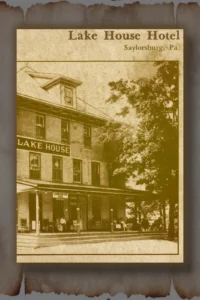
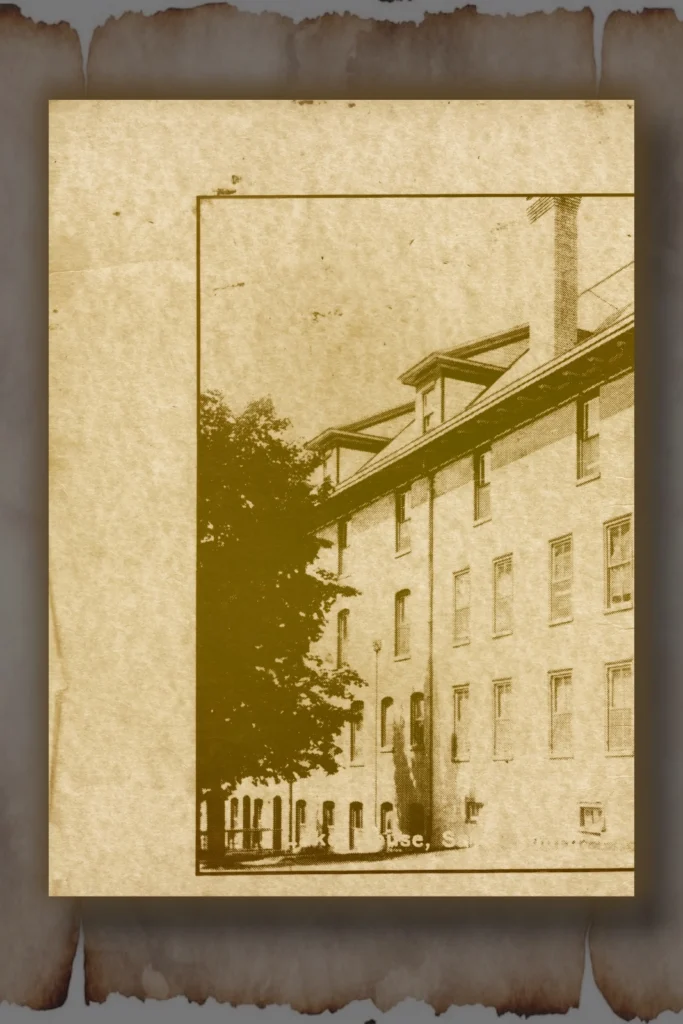
A historical photograph showcasing the grand Victorian addition that removed the roof from original modest inn and replaced is with a mansard roof creating a third floor. This addition also transformed that facade into a celebration of the imposing and ornate appearance of the Victorian architecture of the era.

A historical photograph capturing a rare glimpse into a world before the automobile transformed travel to the Lake House Hotel. Featured in this image are horses tied to the hitching posts as well as guests and staff enjoying all that a Victorian era porch offered during a time of limited climate controls.

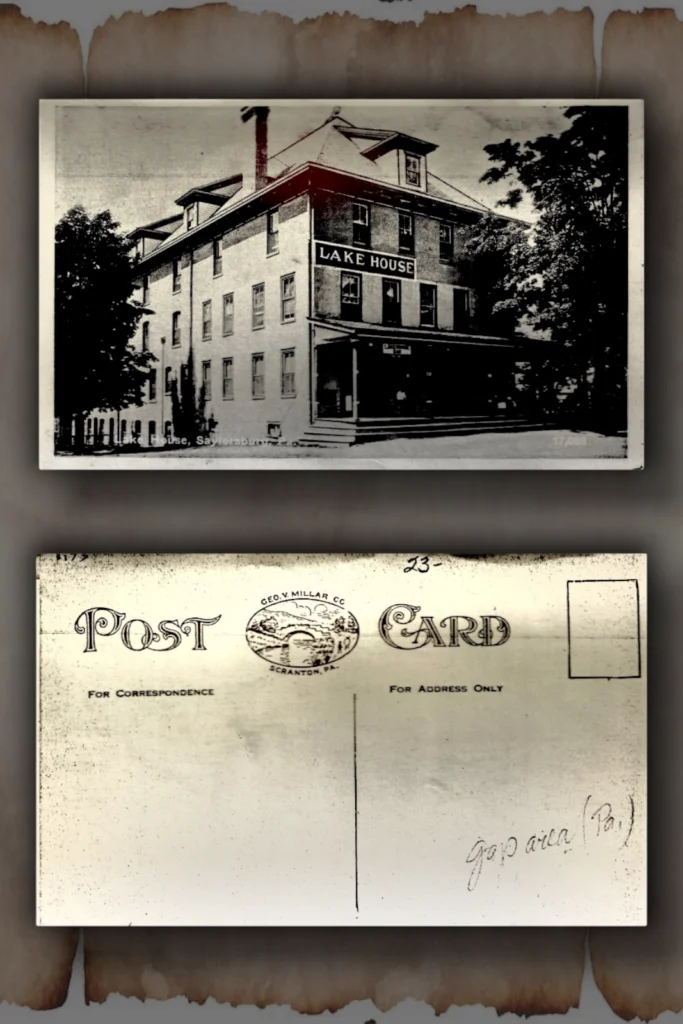
Explore this collection of historic Lake House Hotel postcards and early views of Saylorsburg, Pennsylvania. The postmark dates help place these surviving images within the hotel's remarkable history.
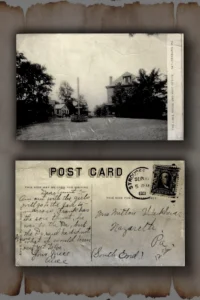
September 6, 1903
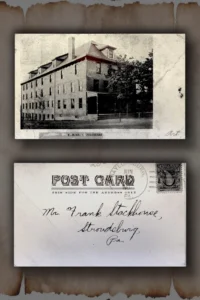
June 15, 1903
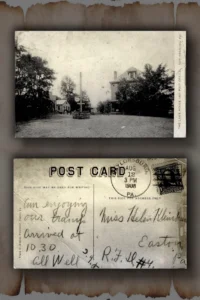
August 12, 1908
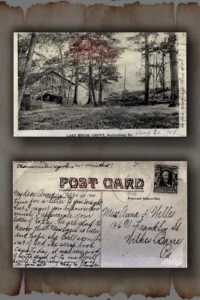
August 20, 1908
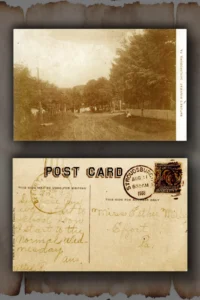
August 31, 1908
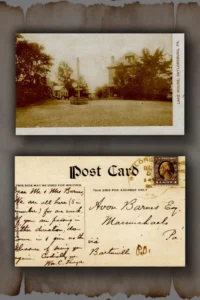
July 6, 1911
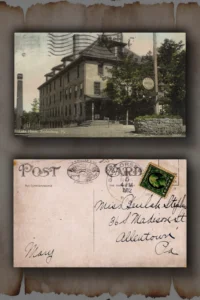
July 5, 1912
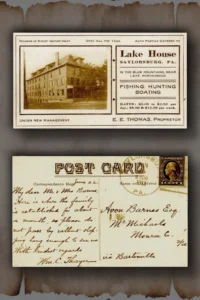
June 24, 1913
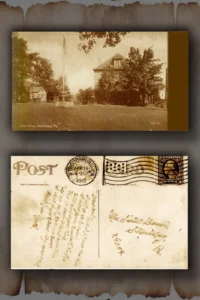
April 19, 1915
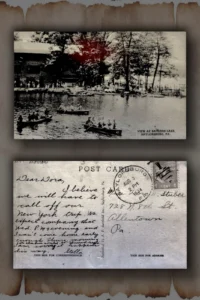
August 3, 1944
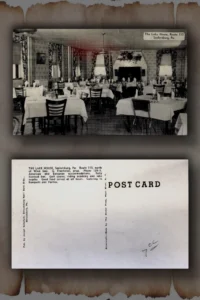
Mid-Century Dining
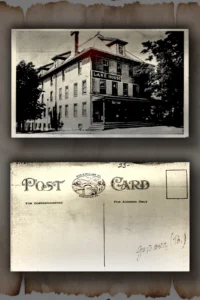
Post 1895 Expansion
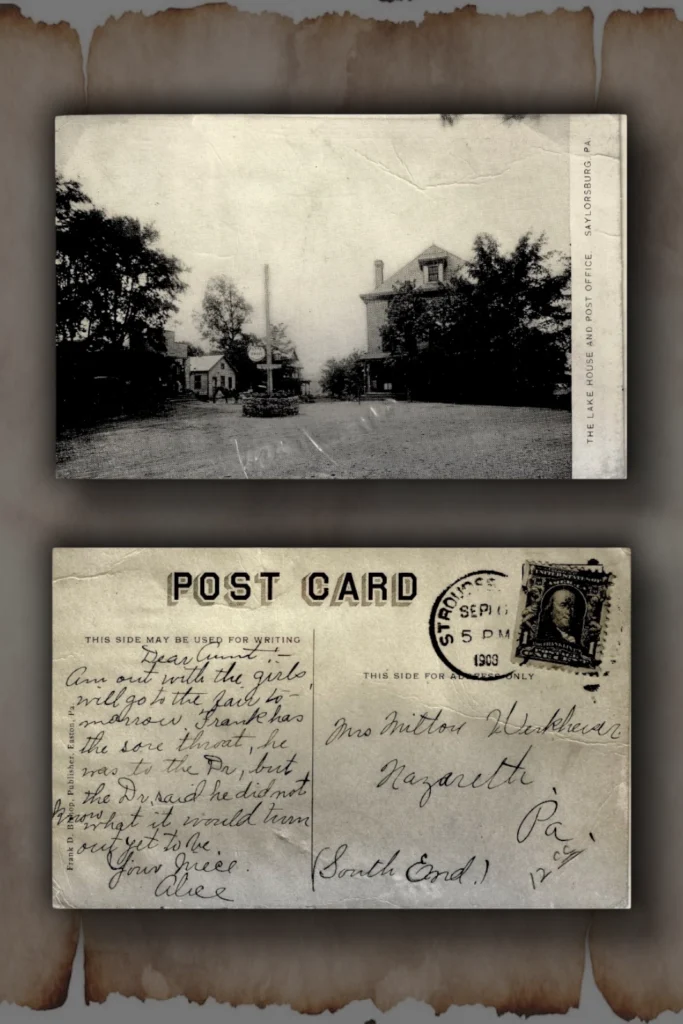
September 6, 1903
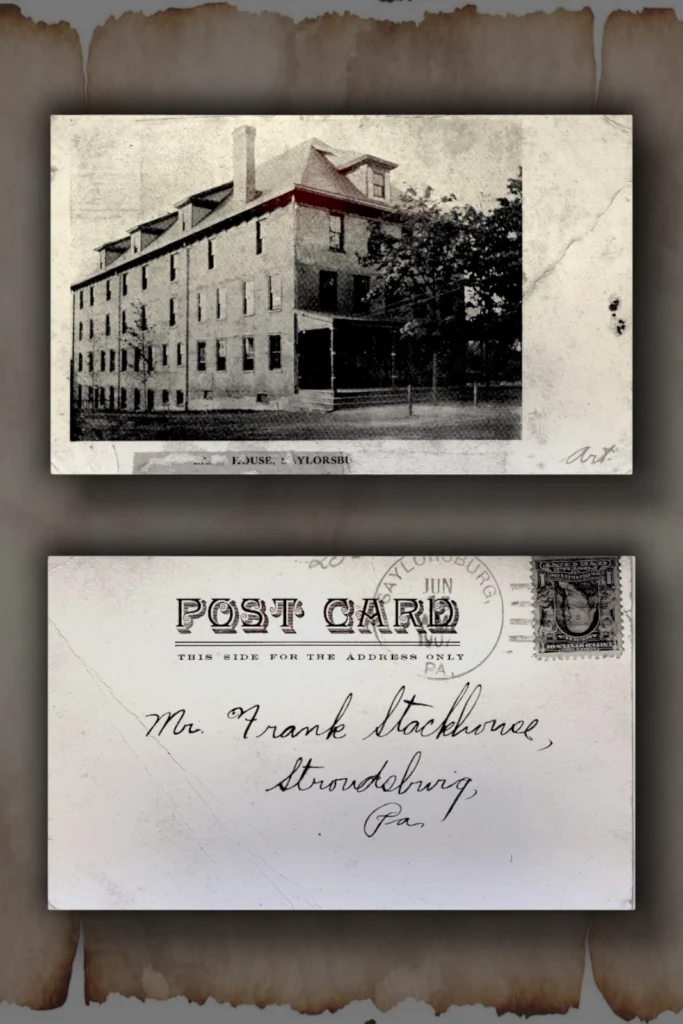
June 15, 1903
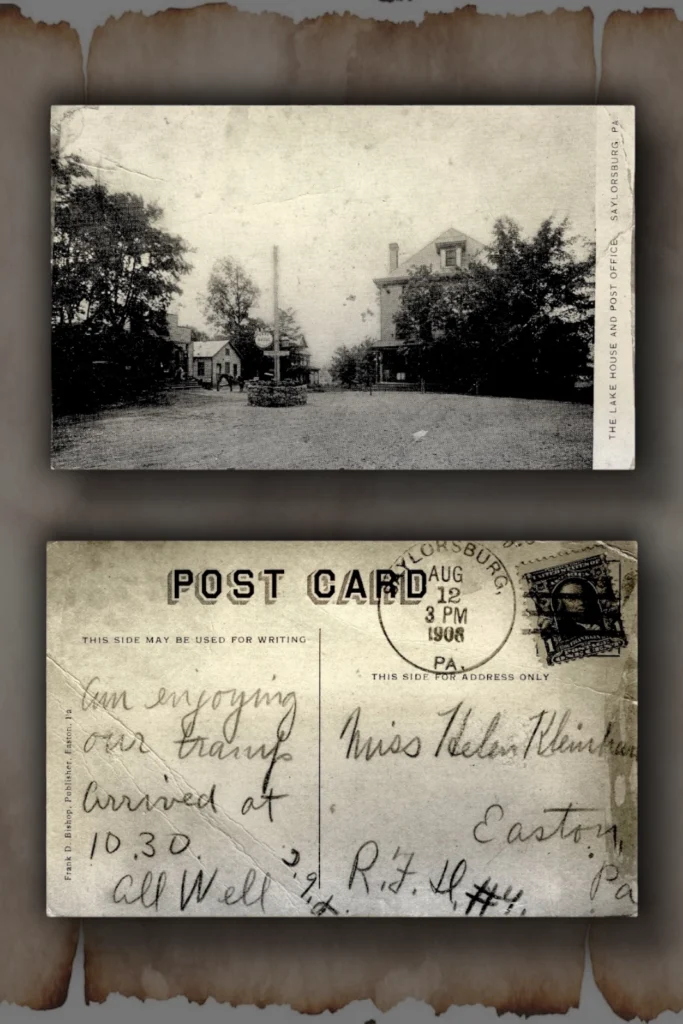
August 12, 1908
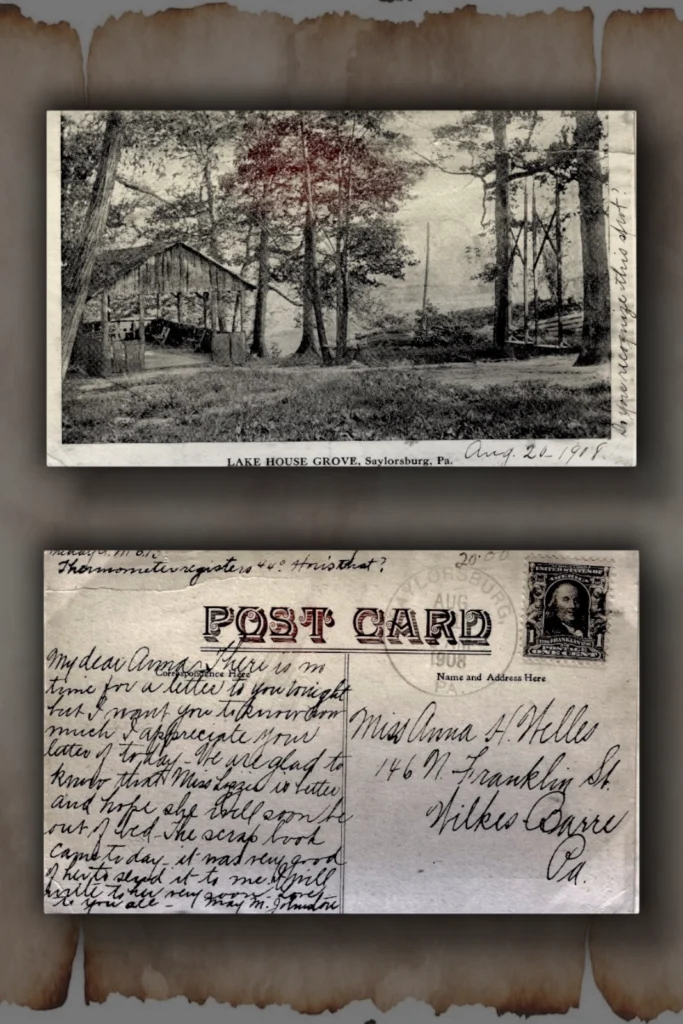
August 20, 1908
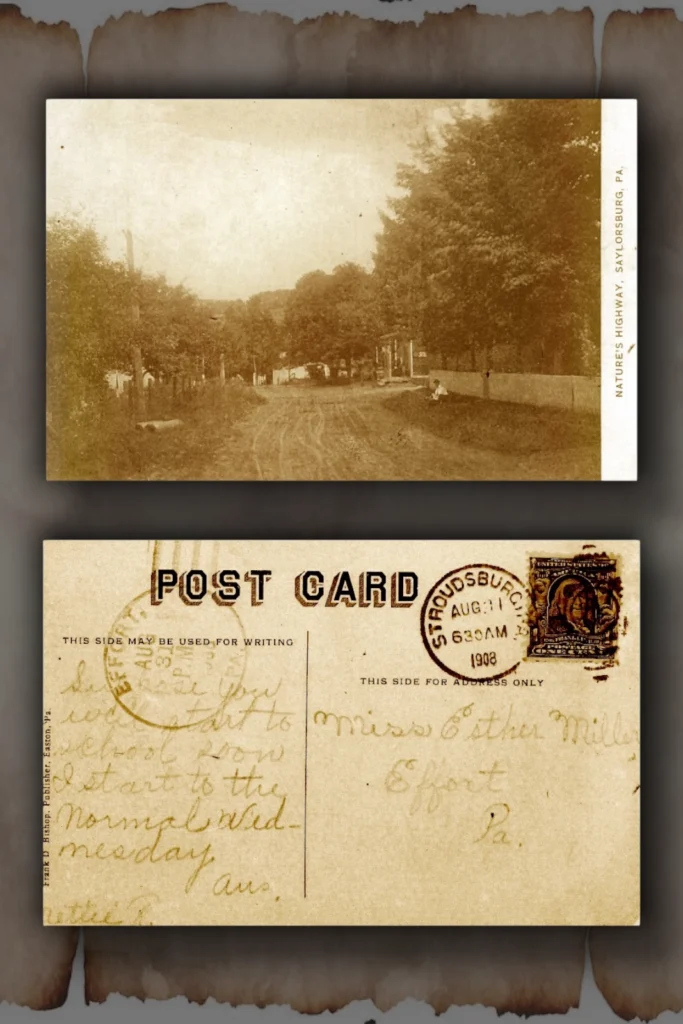
August 31, 1908
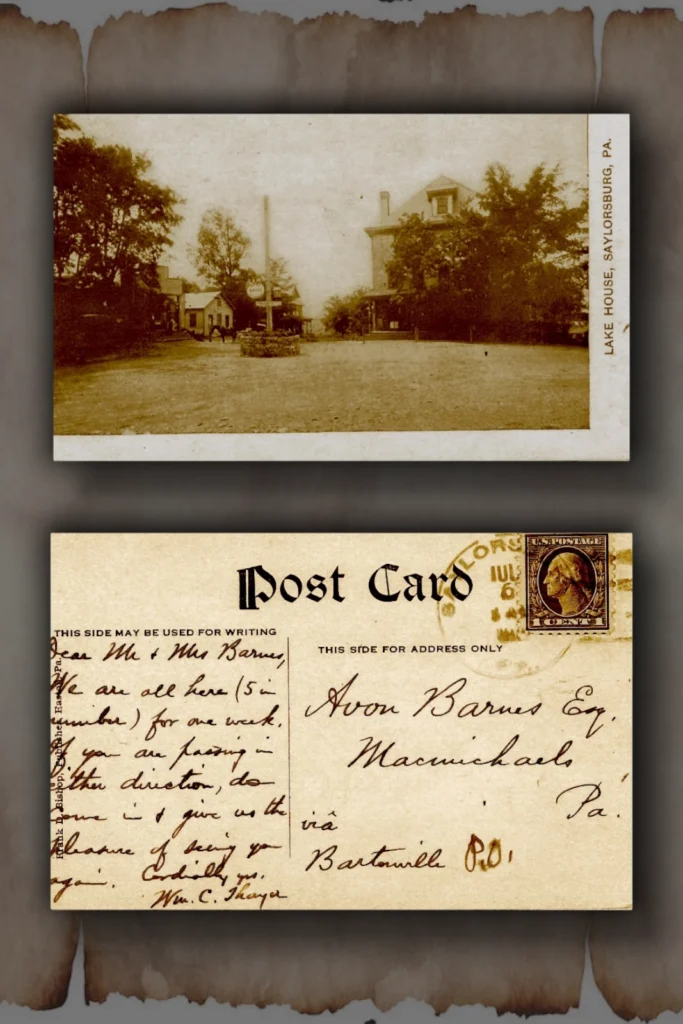
July 6, 1911
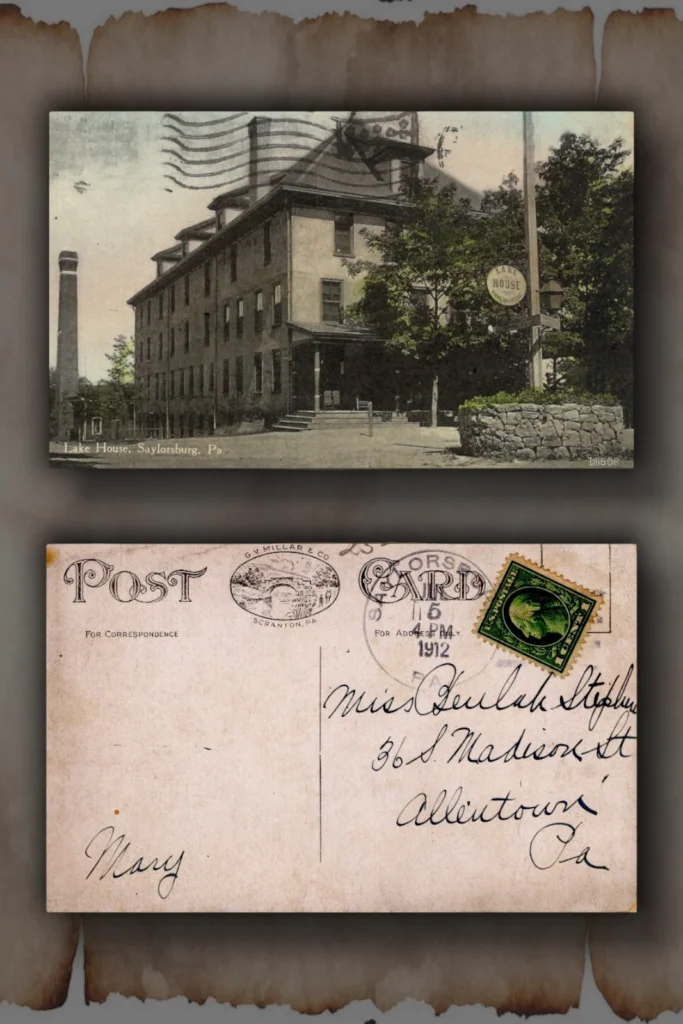
July 5, 1912
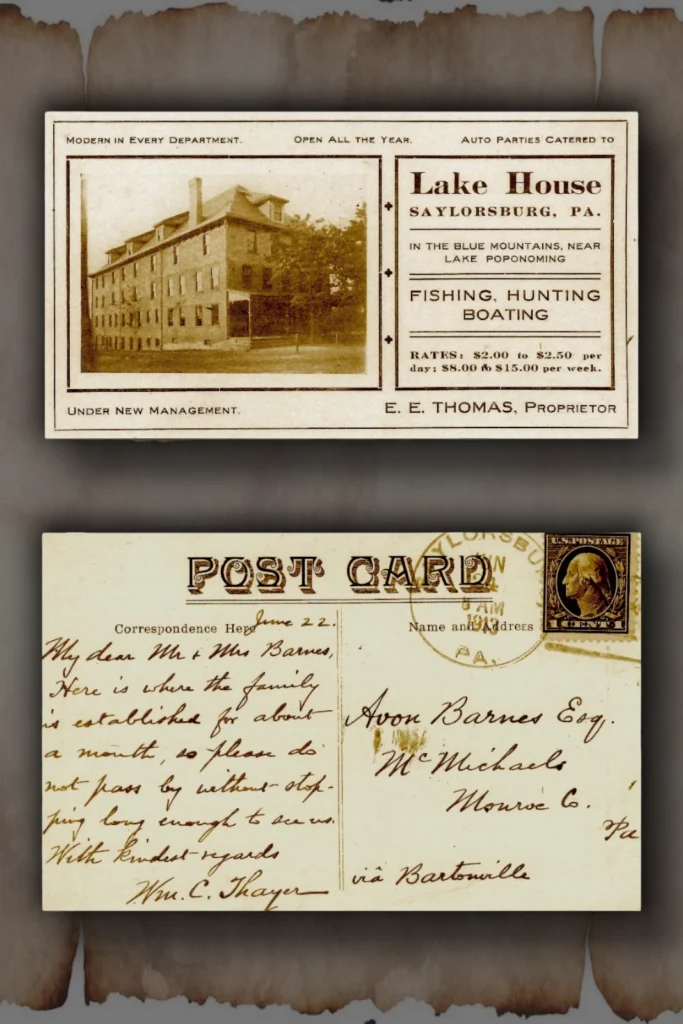
June 24, 1913
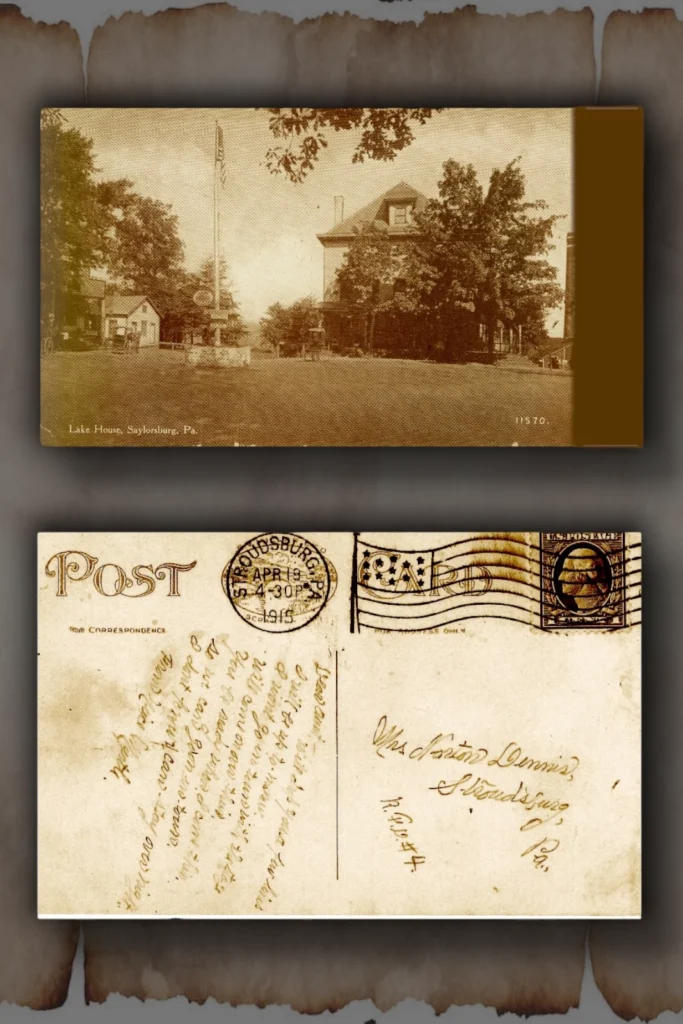
Vintage Postcard Dated 1915
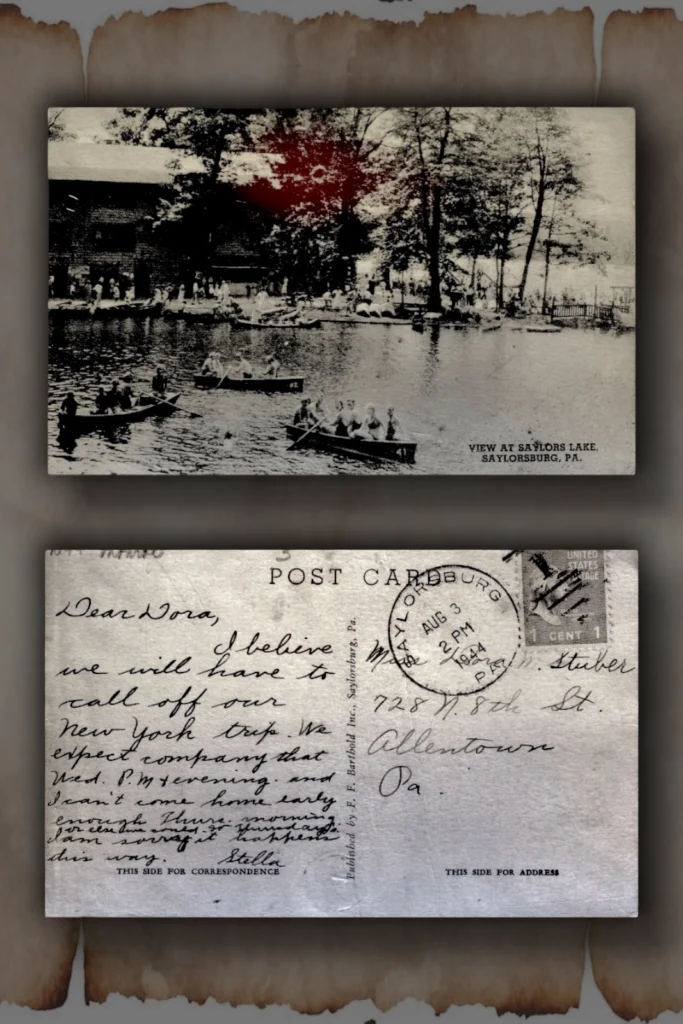
August 3, 1944
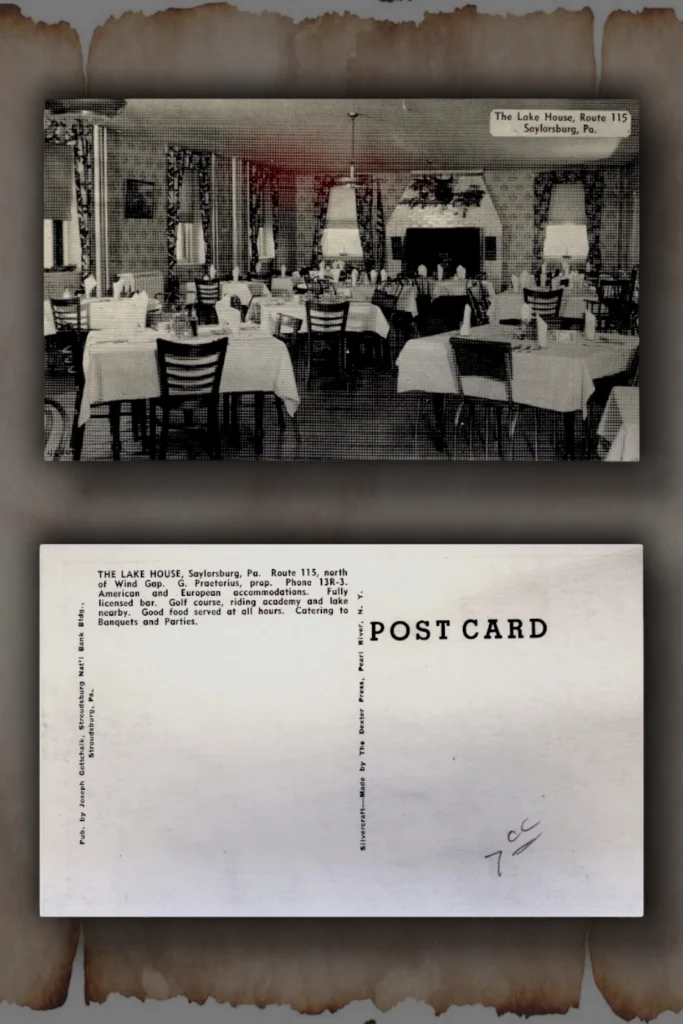
Mid-Century Dining
Post 1895 Expansion
The Timeline of Terror traces more than two centuries of transformation within the walls of the Lake House Hotel. From its earliest foundations, and Victorian origins through grand expansion, celebrated resort years, periods of hardship, mid- century reinvention, and it's final evolution from historic hotel to haunted attraction, each chapter reveals another layer of the properties remarkable past. Together, these eras tell the story of a building that has continually adapted, endured, and found new life – ultimately becoming the home of the Hotel of Horror.
This historic photograph shows the Lake House Hotel following the major expansion completed in 1895. Although the exact date of this photograph is unknown, the figures gathered on the porch and their period clothing place the image firmly within a bygone error. The photograph was likely created to promote the hotel while documenting the completion of this ambitious addition, preserving a striking view of the building at one of the most important moments in its history.
This early- 1800s lithograph depicts the original Saylorsburg Hotel before it’s grand Victorian transformation. The modest inn stood upon a foundation dating back to the 18th century stagecoach stop, linking the property to the earliest days of travel through the region. It preserves a rare view of the building that came before the Lake House Hotel and marks the beginning of the long history that followed.
This dramatized scene represents what it may have been like when the proprietor of the Lake House Hotel welcomed the entire Monroe County Battalion- six companies of soldiers during the Civil War. Though not a surviving photograph of the event, the depiction brings this remarkable chapter of the hotel's history to life recalling a time when its rooms and tables offered hospitality to men preparing for service.
This historic view shows the Lake House Hotel after its grand early Victorian expansion, when the original roof was removed to make way for a third story. The transformation gave the building a more imposing and ornate appearance, marking its evolution from a modest early hotel into the prominent landmark that begins defining the property for generations to come.
This dramatized scene represents the nearby mines along the Chestnut Ridge, where rare white clay was extracted and fashioned into bricks and other building materials. During this time, the already expanded Victorian hotel underwent its largest and final architectural transformation, becoming the massive structure seen today. The new addition also served as a grand showcase for the Blue Ridge Brick Factory and the mine's distinctive white clay products and operations.
This historic photograph shows the Lake House Hotel, following the completion of its largest architectural expansion. Figures in period clothing can be seen posing along the front porch, suggesting that the image was carefully arranged to commemorate the newly transformed building. It is believed to have also served as promotional material for both the hotel and the local brickworks, whose white clay products were showcased throughout the grand addition and sold around the country.
This historic photograph shows the Lake House Hotel after the completion of its grand 1895 expansion. Guests and staff in period clothing can be seen gathered along the porch, while a row of horses stands tied to the hitching posts out front. The scene offers a remarkable glimpse of the hotel during the horse and carriage era, before the automobile transformed travel to the property.
This turn of the century photograph depicts the former Lake House Grove around the nearly 1900s. The rustic lakeside shelter may have served as a gathering or boarding point for the wooden swan boat rides that became one of the hotel property's memorable attractions. Surrounded by trees and overlooking the water, the grove recalls the leisure and natural beauty that helped make the Lake House Hotel, a widely popular destination.
This dramatized scene depicts what life may have looked like after local papers announced the arrival of Spanish Influenza in the Pocono Mountains in October 1918. As the crisis spread, numerous resorts throughout the region were converted into makeshift hospitals to care for the sick. The image reflects a somber chapter in local history, when places built for rest and recreation were called upon to serve communities in a time of emergency.
This dramatized scene represents the fear and desperation that followed the stock market crash of October 1929. According to local accounts, Saylorsburg gained a grim reputation as being dubbed as “the place to hang yourself”. Former guests of the Lake House Hotel, once there for leisure and celebration – returned during the darkest periods of their lives. This image reflects the profound shift from prosperity and recreation to hardship, uncertainty, and tragedy.
This 1944 postcard depicts Saylor’s Lake Pavilion, one of the defining attractions associated with the Lake House Hotel. The lakeside pavilion hosted prominent performers of the era and welcomed many of the hotel’s high-profile guests. Together, the lake, boating, entertainment, and resort atmosphere helped establish the Lake House as one of the region’s most celebrated destinations.
This dramatized scene depicts women working in the basement of the Lake House Hotel, where the Vickie Lee Blouse Company operated during the late 1950s through the 1960s. The scene reflects a very different chapter in the building’s long history, when parts of the former resort property were adapted for light industry and garment production. It stands as a reminder that the Lake House was not only a place of hospitality and entertainment, but also a site of everyday labor and local enterprise.
This mid-century photograph captures the banquet hall dining room of the Lake House Hotel, prepared to welcome guests beneath its chandeliers and formal table settings. Beyond serving the hotel’s visitors, the room became a gathering place for weddings, proms, corporate functions, and other important celebrations. It reflects an era when the Lake House remained at the center of both hospitality and community life.
This dramatized scene depicts the Marine Room, a lower-level bar added to the Lake House Hotel during the mid-century era. Its nautical décor celebrated the leisure, recreation, and lasting popularity of Saylor’s Lake. The room offered guests a relaxed gathering place while preserving the memory of the lake that had helped define the hotel for generations.
This dramatized scene depicts the antique co-op established within the Lake House Hotel after the property was sold in 1990 and its contents were liquidated at auction. The former hotel rooms and public spaces were transformed into displays filled with antiques, collectibles, and remnants of the building’s past. It marked another dramatic reinvention of the historic property as its days as a traditional hotel came to an end.
This dramatized scene depicts the opening of the Hotel of Horror haunted house inside the former Lake House Hotel in October 1992. The new attraction marked another dramatic chapter in the building’s long history, transforming the aging hotel into a destination for Halloween entertainment. What began that year would grow into the enduring haunted attractions housed within its historic walls today.
* These original graphics were created in the likeness of Victorian Era cartes-de-visite, treasured photographic keepsakes once used to preserve people, places, and important moments in time. Their antique presentation celebrates the Lake House Hotel's deep ties to Victorian history and architecture, while allowing each chapter of the property story to be reimagined as part of a carefully assembled historical collection. Wherever possible, authentic historical photographs were used; when no surviving image was available, dramatized depictions were created to help bring those moments to life.
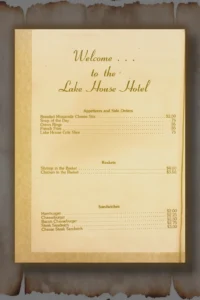
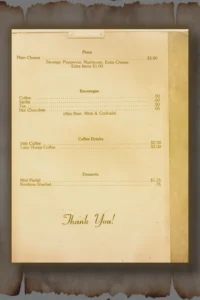
Explore rare surviving menus, advertisements, brochures, and promotional pieces from the Lake House Hotel. Together, these artifacts offer a glimpse into how the property welcomed guests, promoted amenities, and evolved through different eras of Saylorsburg and Pocono tourism history.
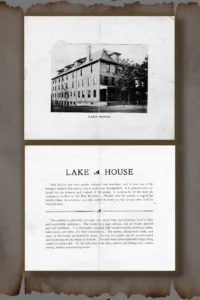
Vintage Advertisement Page 1 & 2
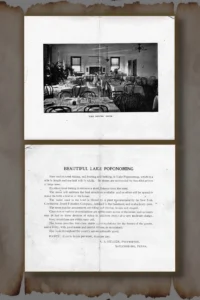
Brochure Page 3 & 4
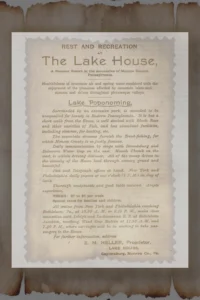
Vintage Advertisement
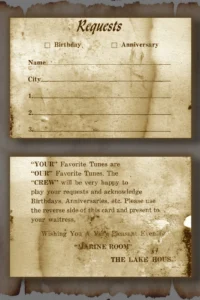
Marine Room Song Card
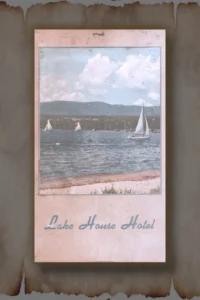
Lake House Menu One
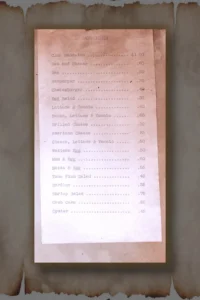
Lake House Menu Two
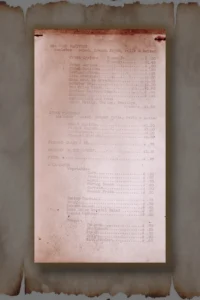
Lake House Menu Three
Vintage Hotel Menu One
Vintage Hotel Menu Two
Vintage Hotel Menu Three
Vintage Hotel Menu Four
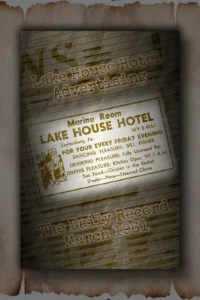
Marine Room Advertisement
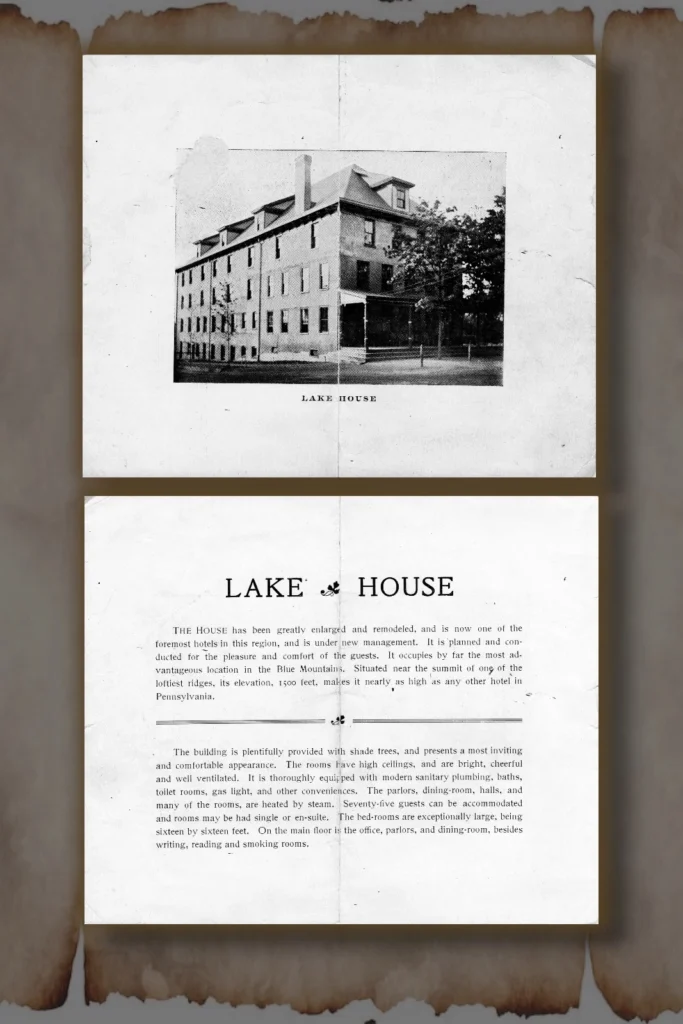
Vintage Advertisement Page 1 & 2
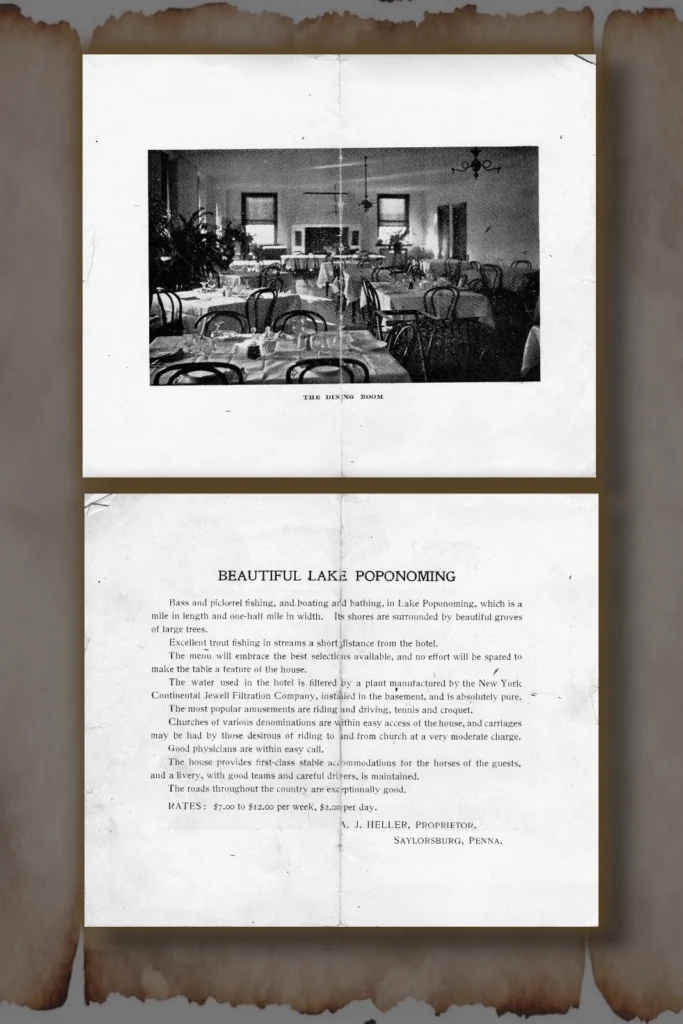
Vintage Advertisement Page 3 & 4
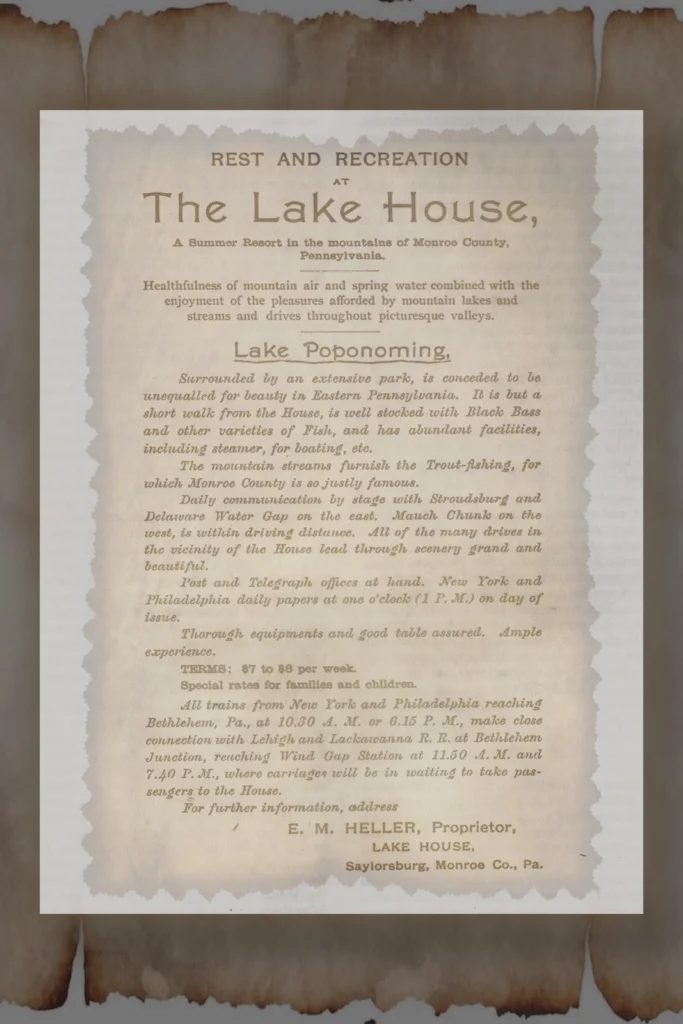
Vintage Advertisement
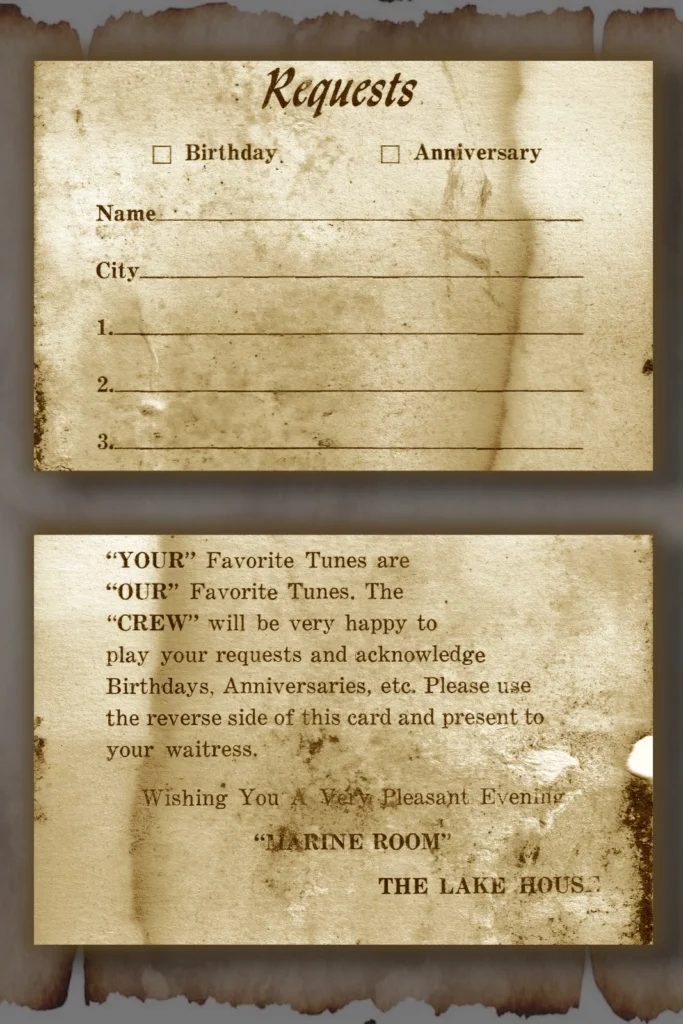
Vintage Marine Room Sound Card
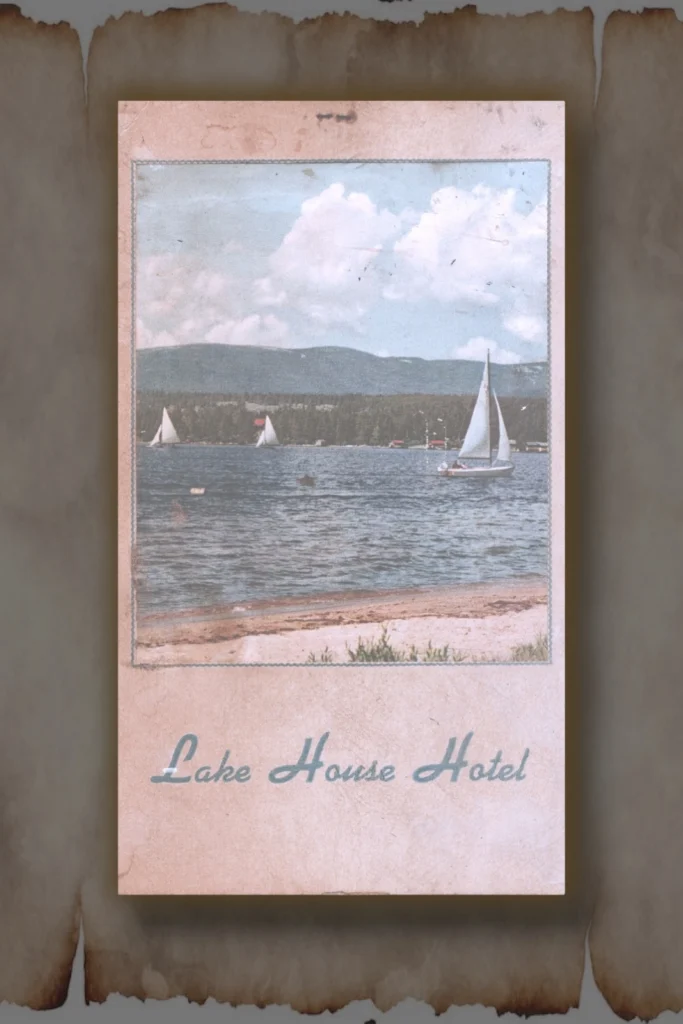
Vintage Lake House Menu One
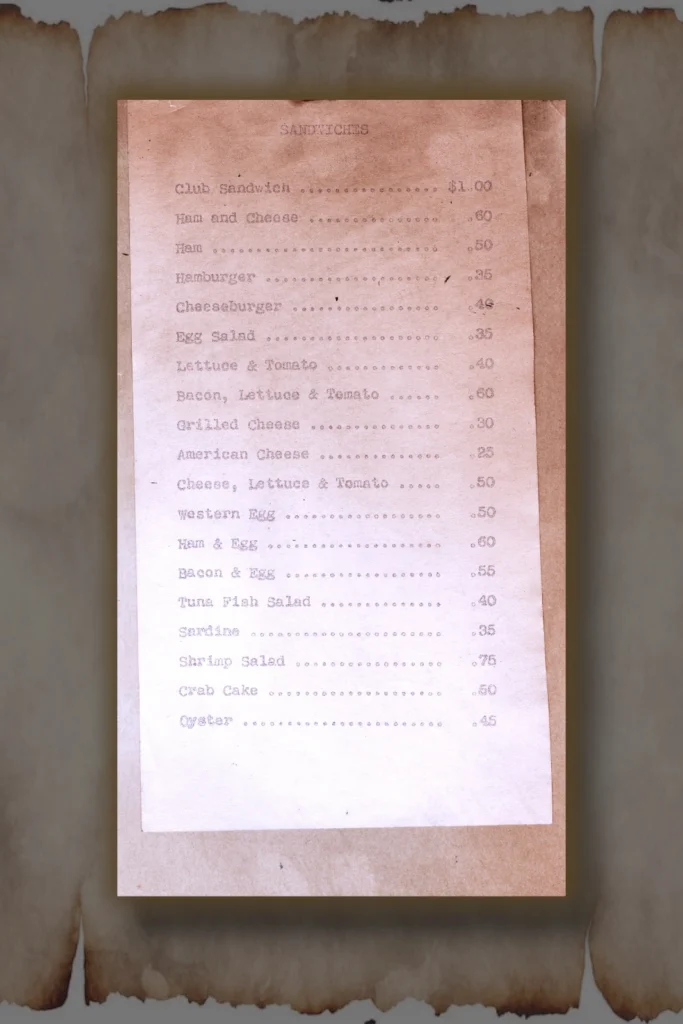
Vintage Lake House Menu Two
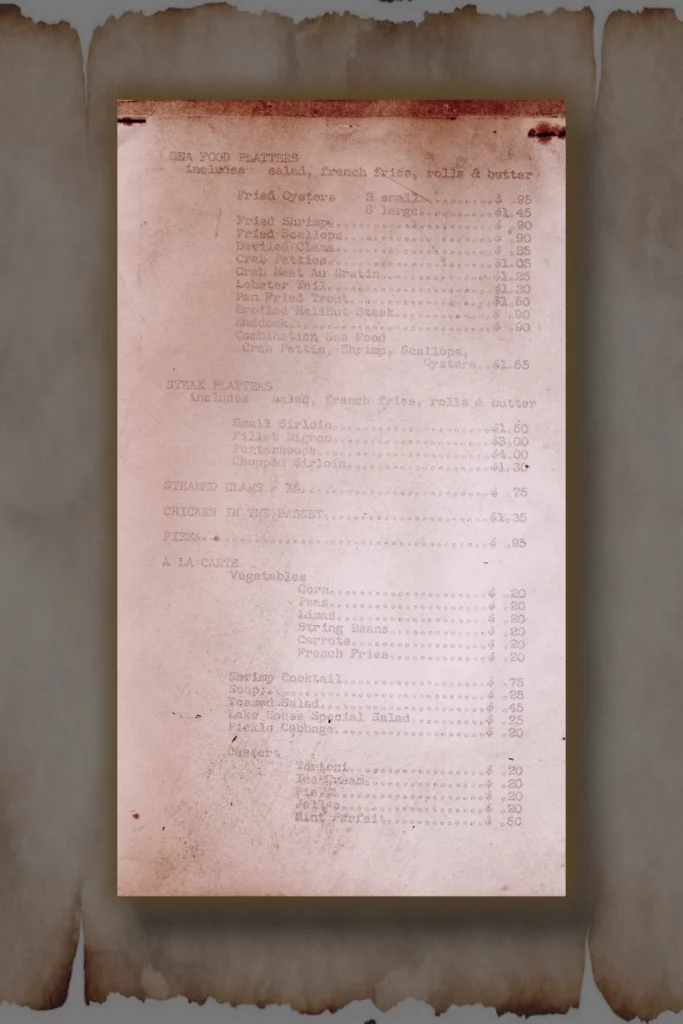
Lake House Menu Three
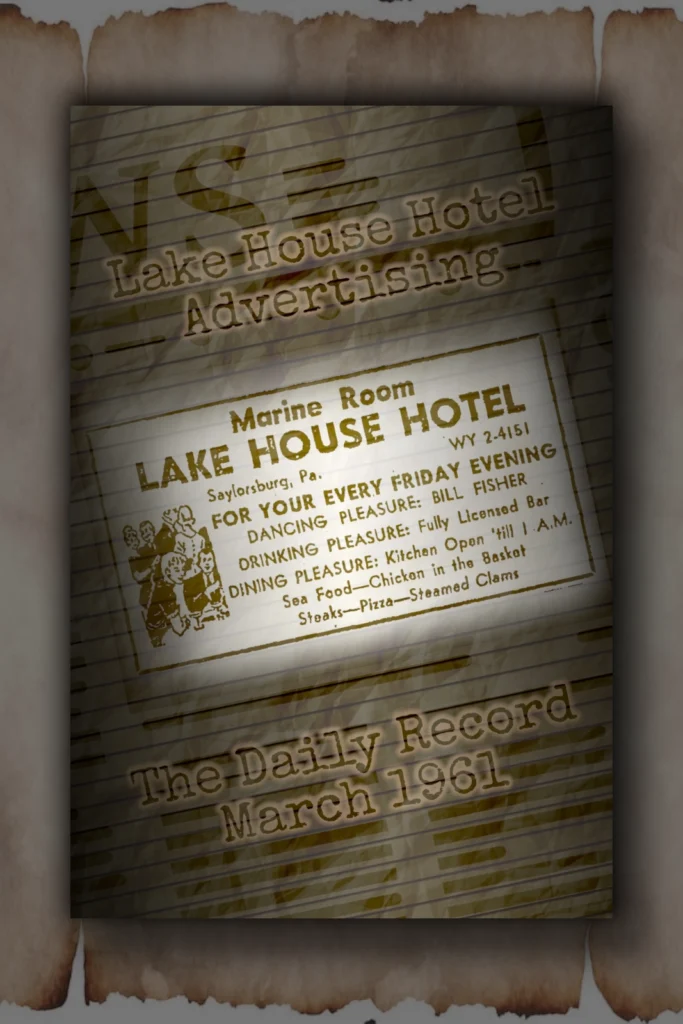
Marine Room 1961
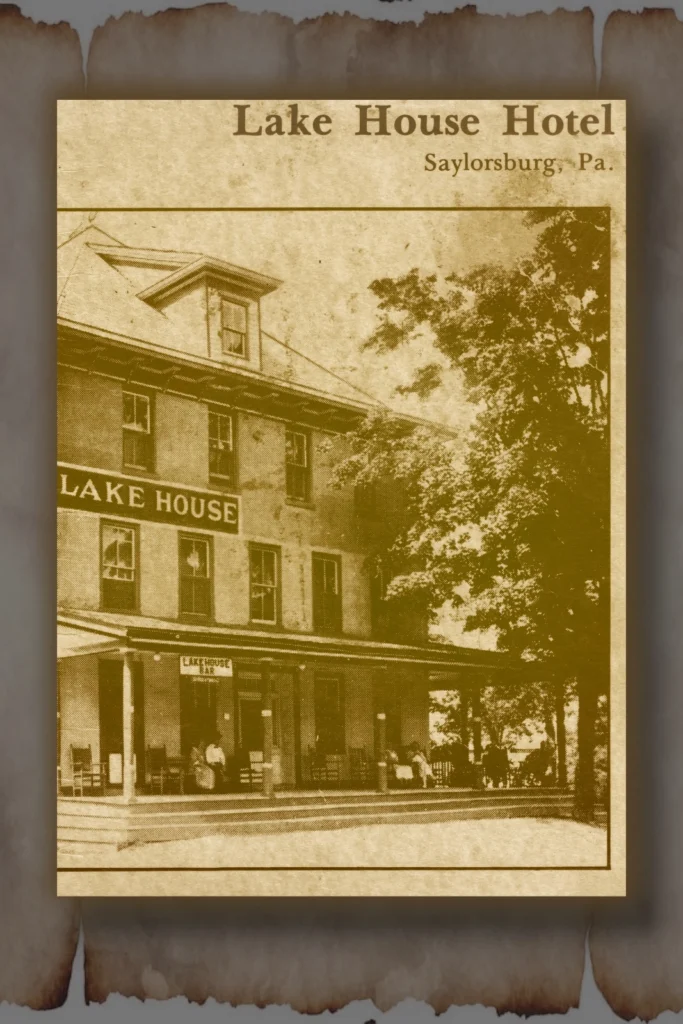
Vintage Hotel Menu One
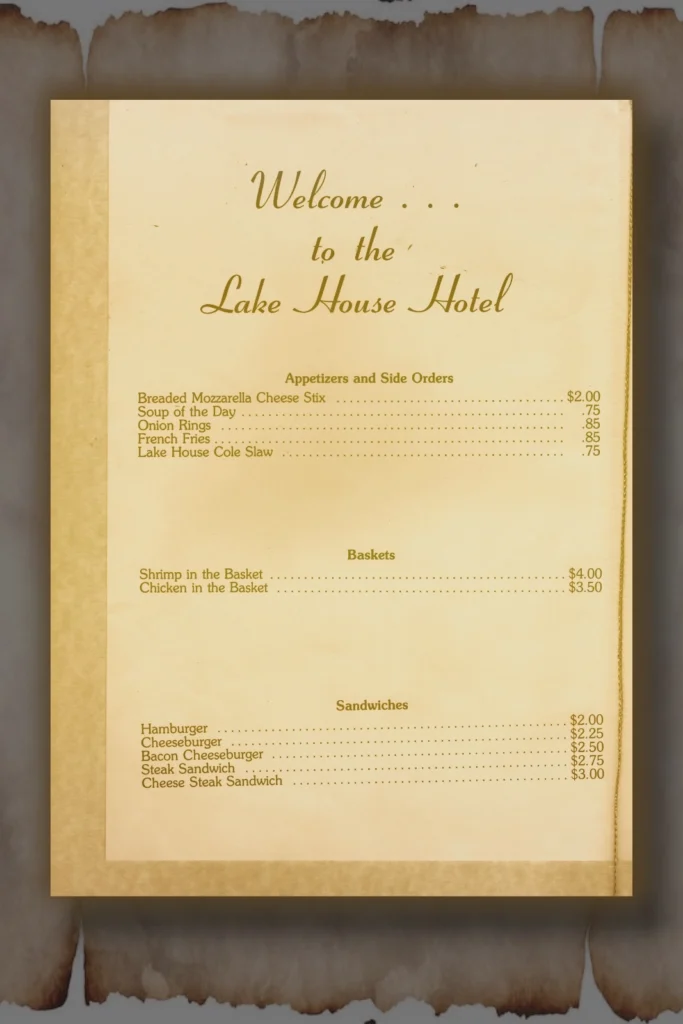
Vintage Hotel Menu Two
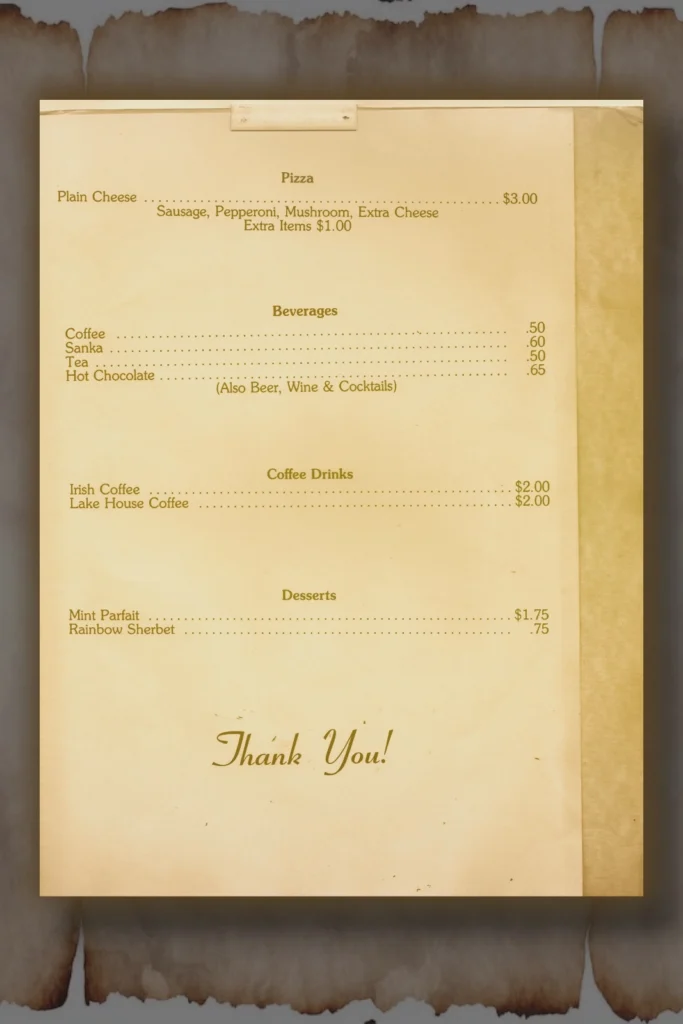
Vintage Hotel Menu Three
Vintage Hotel Menu Four
The history presented on this page was assembled through research conducted using local historical collections, archival materials, historic photographs, and property records. Principal resources include the local regional libraries; Eastern Monroe Public Library and The Easton Area Public Library, the Monroe County Historical Association, the Ross Township Historical Society, and the book The History of Saylorsburg by Leroy Raseley. Some of these materials are preserved and physical collections and are not currently available online.

Click the Key to Enter
Have questions about the Hotel of Horror and our attractions? Contact us today!
Email: info@hotelofhorror.com
Phone: (570) 99 BEAST
Contact
Social
Copyright 2026 Hotel of Horror, All rights reserved.